
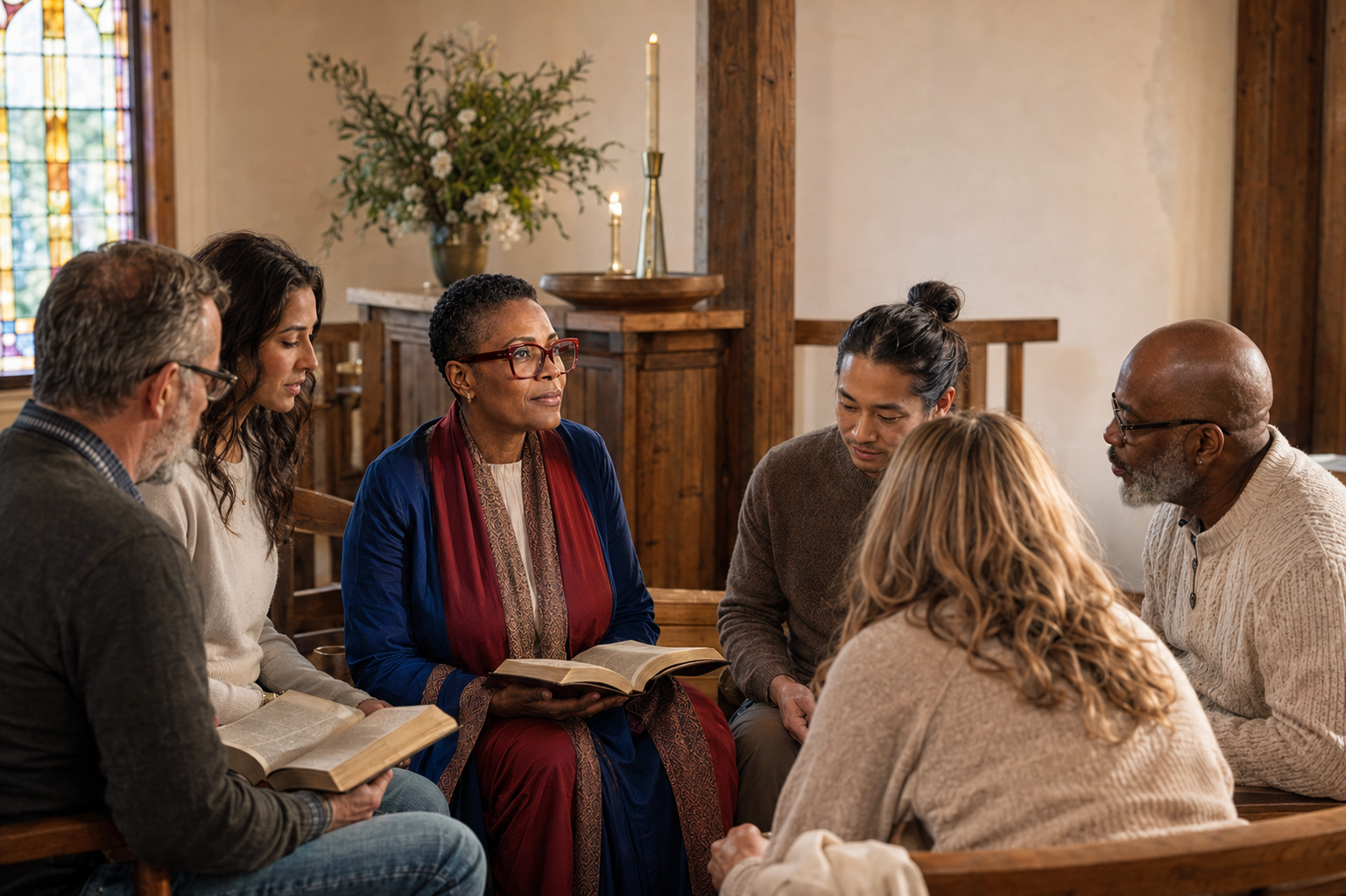
Discovery grows through several forms of evidence
A spiritual-gifts inventory can begin a conversation. Stronger discernment gathers inward resonance, repeated practice, observable fruit, community confirmation, and faithful stewardship. Each form of evidence contributes a different view of how a gift may be emerging and how it can serve others.
The goal extends beyond receiving a label. Participants learn language for their experiences, identify healthy expressions, notice cautions, practice within suitable boundaries, and develop a pathway of service within Christian community.
Adults move from reflection into supervised activation
Adult workshops can combine an original assessment, Scripture study, small-group reflection, community feedback, and supervised exercises. A participant who senses encouragement may practice offering a brief, grounded word. A participant drawn to mercy may design an act of care. A teacher may explain a passage and invite feedback on clarity, faithfulness, and fruit.
Leaders create psychologically and spiritually safe conditions through consent, confidentiality, clear limits, transparent oversight, and responsible referral when needs exceed the scope of the gathering.
Children learn through story, play, and trusted adults
Children benefit from gentle language, imaginative story, collaborative games, and trusted-adult participation. Hear, Discern, Respond, and Steward can become a simple repeating pathway: notice with God, think and pray, choose a loving action, then talk with a trusted adult about what happened.
The Small Keys Journey and Bright Keys: Caribbean Gifts Quest provide child-facing experiences rooted in Scripture, service, belonging, cultural warmth, minimal data collection, and adult responsibility for consequential decisions.